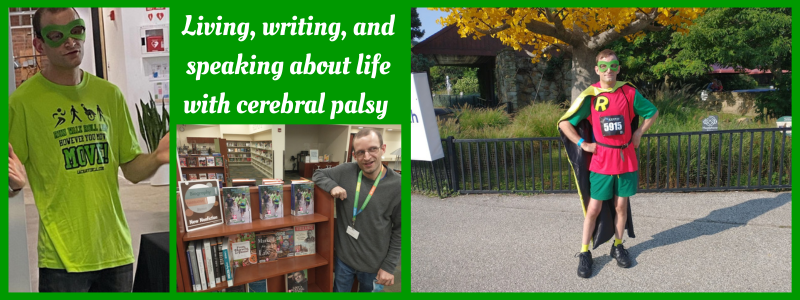

Staying active with a disability can easily feel intimidating, if not impossible! How do you manage staying active on days you feel fatigued? Or, what if exercises increase your symptoms? How do you respond? To help answer these questions and more, I am honored to pass the speaking stick, or I guess blogging stick, over to Laura Carlson. As a licensed counselor and somebody who acquired a disability after a car accident when a teenager, Laura knows firsthand about adapting to life’s traumatic turns and persevering while displaying “endurability.”
Individuals with disabilities can pursue fitness in ways that support real life: transferring safely, reducing pain, improving endurance for errands, sleeping better, or simply feeling more “at home” in their body. The best approach isn’t one perfect workout— it’s a flexible set of options you can adjust as your energy, symptoms, or access changes. Movement can be preventive health care and can also support independence and daily activities.
Staying active with a disability in a nutshell
Staying active is less about “gym culture” and more about choosing movements you can repeat without dread. Start with activities that match your abilities today, then build one habit at a time: a short routine, a consistent schedule, or a supportive environment. If you have questions about safety—pain, dizziness, spasticity changes, joint instability—loop in a clinician or rehab professional and treat that as part of training, not a setback.
Barriers are real, and so are workarounds
Maybe equipment doesn’t fit. Maybe the locker room is a hassle. Or, maybe transportation, fatigue, chronic pain, or unpredictable symptoms make planning hard. You’re not imagining it. The workaround mindset is: what’s the simplest version I can do consistently? A seated routine. A pool session. A resistance band workout at home. A 10-minute roll/walk outside when the weather behaves. The win is consistency, not perfection.
Fitness options that tend to work well

- Seated or wheelchair-based strength training: pushes, pulls, presses, grip work, and core stability variations
- Water-based exercise: buoyancy can reduce joint stress and make movement easier
- Walking/rolling intervals: short “out-and-back” routes you can stop and restart
- Mobility and flexibility practice: gentle range-of-motion work, stretching, or yoga-inspired adaptations
- Cardio you control: handcycles, stationary equipment, dancing, or low-impact circuits
- Adaptive sports or group programs: community + coaching can make consistency easier
Which approach fits today?
| If your day feels like… | Try this style | Why it helps | Make it easier |
| High fatigue, low bandwidth | “Minimum viable movement” (5–10 minutes) | Keeps the habit alive | Set a timer; stop early on purpose |
| Pain-sensitive joints | Water exercise or low-impact seated work | Less load, more control | Warm up longer; smaller ranges |
| You want strength for daily tasks | Functional strength (push/pull/hinge/carry adaptations) | Builds transfer and task capacity | Use resistance bands; track reps, not weight |
| You’re bored easily | Adaptive sport, class, or challenge format | Novelty fuels consistency | Invite a friend; schedule it |
Movement loves a steady start
A healthy morning routine can make fitness feel less like a battle and more like a natural next step. Use those first minutes to prepare yourself for the day—lay out adaptive equipment, pack a snack, cue up a short workout video, or write a one-line plan you can follow even on a low-energy day. When mornings feel chaotic, workouts often disappear; when mornings feel intentional, movement tends to “fit” more easily.
How to build a week that actually sticks
Here’s a simple checklist you can use without turning your life into a spreadsheet:
- Pick your “anchor time.” Same window most days (morning, lunch, evening).
- Choose two “go-to” sessions. One strength-focused, one easy-movement session.
- Decide your stop rule. Example: “I stop if pain spikes sharply or I feel unsafe.”
- Set your environment. Bands by the chair, shoes by the door, playlist ready.
- Track one thing only. Minutes moved, sessions done, or how you felt afterward.
- Plan for plan-B. If you can’t do the full routine, do the smallest version.
Result: you build trust with yourself. That’s the real fuel.
A resource worth bookmarking for inclusive workouts and ideas
If you want a reliable place to explore inclusive fitness options, the National Center on Health, Physical Activity and Disability (NCHPAD) is a strong starting point. It offers programs and resources designed specifically to support people with disabilities in being active and healthy, with a broad mix of formats and topics. You can browse their physical activity resources to find ideas that match your mobility, energy levels, and goals—without the vibe of “one-size-fits-all.” (*Editor’s note- you will find various exercise videos on NCHPAD’s YouTube channel, like the one embedded below.)
Staying active with a disability FAQ
Do I need “adaptive” workouts, or can I do regular workouts?
Either can work. Many people use standard exercises with modifications (range of motion, position, equipment). Adaptive programs can be helpful when you want disability-specific coaching or accessible options.
What if exercise flares my symptoms?
That’s common with many conditions. Scale down intensity, shorten duration, build more rest, or swap movements (for example, choose a pool or seated version). If flares are severe or new, get medical guidance.
Can I strength-train without a gym?
Yes. Resistance bands, bodyweight variations, seated dumbbells, and household items can be enough to build strength over time.
What if I feel self-conscious?
You deserve accessible spaces. Try quieter times, home routines, inclusive programs, or a buddy system. Confidence often follows repetition.
Conclusion
Fitness with a disability doesn’t have to look a certain way to “count.” The most empowering plan is the one you can return to—especially on imperfect days. Start small, adjust without shame, and build around your real life. Over time, those repeatable choices can support health, independence, and confidence.
More about Laura:
Laura Carlson is the creator behind Endurabilities. She became disabled after a car accident when she was 13 years old. Today, her life’s calling is helping those who’ve experienced similar traumas. In addition to heading up a support group for people who are coping with a traumatic life transition like she experienced, she created Endurabilities as a small way to let people know that they can endure any health condition by taking the best care of themselves they can. It is Laura’s sincere hope that her site will inspire people to discover their own “endurability,” no matter what challenges life has thrown their way.
